

Faculty of Arts and Science

Join innovative and intelligent students like you in the pursuit of a world-class degree in Arts and Science. Our faculty offers over 21 areas of study ranging from Biology to Sociology so no matter where your passion is we have a program for you.

  • Engage with some of the best educators and thought leaders with Nipissing small class sizes.
  • Benefit from personalized attention and in some cases even participate in graduate-level research.
  • Experience a truly unique setting with state-of-the-art facilities nestled in 256 acres of pristine forest.
  • If you love the outdoors and are looking for a quality education Nipissing is for you.
  • Guaranteed single room in residence for first year students admitted from high school.

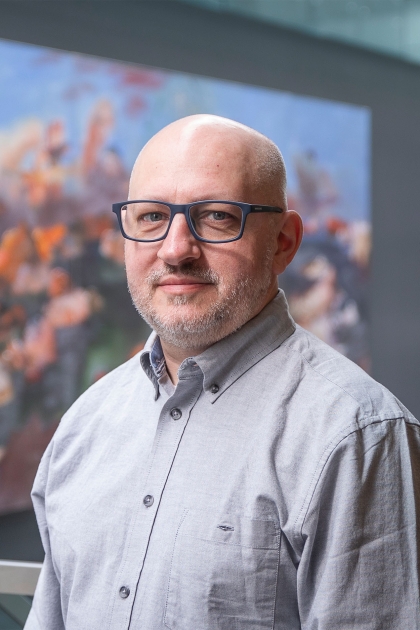
A man in gray shirt standing with the interior background of the library in view

Nathan Colborne, Dean of Arts and Science

Welcome from the Dean of Arts & Science

Welcome to the Faculty of Arts & Science at Nipissing University!

We are delighted to have you as part of our vibrant academic community. Whether you are learning, teaching, researching, or supporting the work we do, your contributions make our faculty a dynamic and inspiring place.

The Faculty of Arts & Science offers an incredible range of opportunities to explore ideas, expand knowledge, and engage with the world. From the wonders of the natural sciences to the creativity of the arts and humanities, our disciplines invite curiosity and foster growth. Together, we are committed to excellence in education, research, and collaboration.

At Nipissing, we value small class sizes, personalized attention, and a welcoming environment where everyone feels at home. We emphasize experiential learning and diverse approaches to teaching and scholarship, ensuring that our community thrives both inside and outside the classroom.

Life at Nipissing is about more than academics. It’s about building connections, discovering new interests, and contributing to a supportive and inclusive campus culture. We encourage you to take advantage of the many opportunities available, whether through research, extracurricular activities, or community engagement.

Thank you for being part of our faculty. We look forward to working, learning, and growing together.

Facilities and Research Centres

Learn more about the interdisciplinary research taking place in our research centres and groups.

Learn more
 

Program Specific Resources


Computer Science, Data Science

SHARCNET

SHARCNET is a consortium of 18 colleges, universities and research institutes operating a network of high-performance computer clusters across south western, central and northern Ontario.

Our technological facilities are ​up-to-the-minute, including computer labs and robotics labs. We also provide access to SHARCNET, a consortium of universities who share a network of high performance computers that enables research.

     The Sun Lab

       a dedicated Computer Science instructional space

     Physics Lab
     Robotics Lab

English Studies

Creative Writing Courses

Students wishing to enroll in ENGL 3516 and/or ENGL 3517 must prepare the following application package:

  1. A letter of application containing all contact information, including student number, and indicating which course(s) student is applying for entry to
  2. A portfolio of the student’s best work in poetry (5-10 pages, double-spaced) or prose (5-10 pages, double-spaced) or both, as required
  3. Packages should be submitted, in paper copy, to the Chair of English Studies by April 15
  4. Students will be contacted by the Course Instructor


Honours Seminars

English Studies Honours Seminars Information PDF

What is an Honours Seminar?

The Seminar is a “capstone” experience for students in their fourth year of the Honours Specialization in English Studies. Seminars are typically focused on an aspect of the professor’s research interests and thus give students an opportunity to delve into the heart of academic specialization. However, students should note that once it has been conceived and planned, the seminar is not about the professor but about the students in the class. These courses have no lectures, and the day-to-day course content is built entirely through directed discussion and presentations. Students should come prepared to develop their own topics and generate their own ideas using the skills they have acquired over their degree. In order to facilitate this active dialogue, the classes are small, typically capped at 15.

What kinds of assignments will I have to do?

Every seminar involves a major oral presentation (this often includes not only a formal presentation but leading the entire class discussion for the day) and a large independent research essay. As well, most have up to 25% of the total mark designated for day-to-day class participation. Other assignments may vary according to the professor.

Are they hard?

Yes, but most students report seminars to be one of the most rewarding classroom experiences of their university careers.

How does registration for seminars work?

The same as any other course though please note that they are restricted to students in the fourth year of the Honours Specialization. Every student is guaranteed the six-credits of seminars necessary to fulfill their degree requirements; however, access to individual courses is limited by the course capacity (strictly maintained to ensure the academic integrity of the course). Enrolment in particular topics or time-slots is done on a first-come, first-serve basis.

What kinds of seminar topics could I expect?

Below are some topics from past years. Keep your eye on the English Studies page and WebAdvisor for the specific descriptions of the courses available for registration. Also consider the option of doing an independent study project (“ENGL4695 Honours Essay” and “ENGL4795 Creative and Critical Writing Honours Essay”). Some restrictions apply, so see the information below for more details.

Honours Seminar Topics from the Archives

  • The Canadian Historical Novel
  • The Victorian Fantastic
  • The Culture of War and Contemporary American Literature
  • Early Modern Cross-Dressing
  • The Lord of the Rings
  • Literature and Existentialism
  • The Art of Sacrifice

Honours Essay Independent/Directed Study Projects

There are two options for the highly motivated student who might want to pursue her or his own subject of honours level research, with the guidance of a faculty member in English. ENGL4695 Honours Essay is a literary research project: a supervised critical essay of 9,000 to 12,000 words. ENGL4795 Creative and Critical Writing Honours Essay consists of two parts: a creative writing project and a critical essay. Both require standing at fourth year in the Honours program and a 77% discipline average. Pre-approval is required before a student is able to register. The applicant must identify which option she or he would prefer and locate a faculty member who would be willing to supervise the project. The student should then work with the professor to produce a short proposal for the project to be approved by the English Department. The deadline for proposals to the department is March 10. Please note, that though these courses are 6 credits, the student will still be required to complete 3 credits of Honours Seminars.

Environmental Physical Geography, Environmental Geography

Nipissing University Geography Club

Dedicated to enhancing the social and educational well being of geography students at Nipissing University, North Bay.

Fine Arts

Student Resources

Nipissing Alumnus, Holly Cunningham, discusses media arts culture and youth in the north.

Community Resources

History

Our faculty study and teach a variety of fields in North American, European and World History. We have expertise in Canadian political and social history, modern and early modern European and British history, the Middle Ages, the colonial and antebellum United States, the Second World War and its aftermath, the history of genocide and war crimes trials, Russian/Soviet history, 20th century International history, and more!

The Seminar Experience at Nipissing University

Our students attend two hours of lecture and one hour of seminar per week. During the small weekly seminars students critically discuss the course material which includes historical documents. The seminar instructors also offer skills training to help students master university-level essay writing. The seminars are designed to help students get comfortable with expressing their ideas.

The History Department's Style Guide

The standard style and reference guide that students should use while writing their essays.

The Canadian Historical Association / La Société historique du Canada

Founded in 1922, the Canadian Historical Association / La Société historique du Canada is a bilingual not-for-profit and charitable association devoted to fostering the scholarly study and communication of history in Canada. It is the largest of its kind in the country.

The Association seeks to encourage the integration of historical knowledge and perspectives in both the scholarly and public spheres, to ensure the accessibility of historical resources, and to defend the rights and freedoms of professional and emerging historians in the pursuit of historical inquiry.


Cradling the Heart: An Anishnabek Creation Story (Video)

Terry Dokis is a citizen of Dokis First Nation with kinship connections to Nipissing First Nation. Over more than twenty-five years, Terry created, sustained, and taught in the Indigenous Studies program at Nipissing University. In 2018, just after he retired Terry generously agreed to work with Katrina Srigley and Greg Foster to gift us a version of the Nishnaabeg Creation Story he carries, Cradling the Heart: an Anishnabek Creation Story is the result.

The Nipissing Warriors Documentary (Video)

Nipissing University is proud to present this exclusive release of the documentary movie Warriors. Emerging from the Nipissing First Nation Culture and Heritage history preservation project, the movie was jointly produced by Dr. Katrina Srigley, professor of History; and Glenna Beaucage, Nipissing First Nation culture and heritage manager, in association with Regan Pictures.

Indigenous Studies

Biidaaban Community Service-Learning (BCSL)

Community Service-Learning (CSL) is a form of experiential learning that addresses community needs. Faculty incorporate CSL opportunities in their courses for students to support community organizations in many ways. 

Indigenous Studies Student Showcase

A showcase of photos, artwork and cultural learning by our talented Indigenous students, staff and faculty. Plus, find details about upcoming indigenous events as well as an archive of past events, posters and other information.

Indigenous Resources Guide

A guide highlighting works by and about Indigenous Peoples.


Mathematics

Math Drop-In Centre

You can participate in math competitions like the Kangaroo Contest or in student-organized events like Pi Day. If you’re interested in teaching, you can get involved in running math circles at local elementary schools. You can also tutor your fellow students—or get some help yourself, if you need it—at the Math Drop-In Centre.

NUMERIC

The Nipissing University Mathematics Education, Research, and Information Centre (NUMERIC) represents a group of educators from the Faculty of Arts and Science (Mathematics/Physics), the Faculty of Education (Mathematics), and the local community who share an interest in promoting the learning and appreciation of mathematics through a variety of sponsored events.

We are pleased to announce that Nipissing University is an Afilliate Member of The Fields Institute for Research in Mathematical Sciences. The Fields Institute, while focusing much of its attention on mathematics as a discipline, also features the Math Ed Forum which offers regular public meetings at Fields, as well as sponsoring a variety of mathematics education events and projects. 

Nipissing Computational Physics Laboratory (NCPL)

The general focus of the NCPL is to develop, implement and apply advanced numerical algorithms and computational methodologies for the solution of problems arising from nanophotonics for nanotechnology and nanomedicine applications. The NCPL is an advanced physics lab intended for junior and senior level students in science and engineering. We are primarily engaged with the design of algorithms for nanoscale and multiphysics problems described by 3D fully coupled partial differential equations. Our lab is equipped with high performance computational server and several workstations with multiple operating system environments, and running a number of computational and simulation programs including COMSOL Multiphysics, MATLAB, Maple, Mathematica, Numerical Recipes, the Electronic Workbench, and others.

Topology Research Group

Topology is a study of very far reaching generalization of geometric properties of objects, invariant under special types of deformations. Topological methods are widely used in functional analysis, differential equations, algebra, and other areas of mathematic. The following topics are of particular interest for the members of the department: dimension theory (classical, cohomological, extension, and asymptotic dimensions; infinite-dimensional spaces), selections, continuum theory, dynamical systems. 

Philosophy

Nipissing University Philosophy Society (NUPS)

Get involved beyond the classroom, the Nipissing University Philosophy Society is a monthly gathering where you can hang out with your peers and discuss ideas.

Political Science

Nipissing University Peace Research Initiative

Alternatively, you may want to get involved with NUPRI, the Nipissing University Peace Research Initiative, which is dedicated to facilitating, coordinating, and providing common space for individuals and organizations to meet and develop peace-building projects and events. Its Agents of Peace project includes an innovative online database that catalogues the work of people who are dedicated to promoting peace, and you can participate.​

You can further your learning as an undergraduate student by taking on a research assistant role and working with a professor, which is excellent preparation should you want to pursue graduate studies.

Political Science Student Goals

1st Year - Educating intelligent, engaged citizens

Goal: To be able to speak and write intelligently about current politics using key concepts of political science.

2nd Year - Basic training in political science scholarship

Goal: To be able to write a political science essay referring to primary sources in the discipline.

3rd Year - Advancing scholarship through debate and collaboration

Goal: To be able to lead a seminar discussion, referring to key concepts and advanced texts using current political events for examples.

4th Year - Preparation for graduate or professional studies through specialized independent study

Goal: To be able to organize and write a major research paper and present an original thesis.

“…one must go the longer way and must labour no less in studies than in the exercises of the body, or else, … he will never come to the end of the greatest study and that which most properly belongs to him.” Plato Republic, 6.504d

Political Science Resources

Political Science Resources

CIA World Fact Book: From Afghanistan to Zimbabwe, current information on a country's government, economy, geography, people, military from the perspective of this American intelligence agency.

Constitute Project: The World's Constitutions to Read, Search, and Compare. Links to full-text versions of documents available on the web.

ElectionGuide.org: Guide for election dates, information, and results for countries around the world covering 1998 to present.

openDemocracy.net: An online global magazine of politics and culture.

Government of Canada

Canadian Department of Foreign Affairs and International Trade

Perseus Project: an extensive searchable digital collection of classic texts.

Wikipedia: An online open-source encyclopedia. A good place to begin identifying unknown terms or names.

Millennium: A progressive, graduate-student-run journal of international relations.

Foreign Affairs: A highly reputable journal of international relations. Use the sign up feature to have new issues delivered to your email address before they arrive on news stands.

Foreign Policy: An on-line compliment to the magazine on global politics, economics and ideas.

The Economist: Much more than economics: global news and views.

American Journal of Political Science

Human Rights Watch: An organization dedicated to protecting the human rights of people around the world. Detailed issue and area specific reports are available to download.

Ceasefire: A web-based resource maintained by the Polaris Institute to collect news on Canada's military spending while promoting peace, disarmament and social justice.

Polaris Institute: A think-tank, media relations agency and lobby group working towards peace while providing orientation for citizen movements fighting for democratic social change in an age of corporate driven globalization.

Project Ploughshares: An ecumenical agency of the Canadian Council of Churches established in 1976 to implement the churches' call to be peacemakers. Their mandate is to work with churches and related organizations, as well as governments and non-governmental organizations, in Canada and abroad, to identify, develop, and advance approaches that build peace and prevent war, and promote the peaceful resolution of political conflict.

The Maps of War: A Flash animation of the various empires that have carved up the Middle East from 3000 BCE to the present.

Princeton Web Lectures: A selection of lectures delivered at Princeton University by distinguished scholars in streaming video.

Derrida and the Ends of Man: An account of Derrida's deconstruction of modernity and the sort of self that sustains that civilization.

Allan Bloom on Nietzsche: Audio of an Allan Bloom lecture on the relevance of Nietzsche.

Slavoj Zizek on love: Zlavoj Zizek on how to love the world.

China and the Olympics: Naomi Klein on China's role as a player on the global stage, and the emergence of its 'authoritarian capitalism'.

Chomsky on U.S. policy: Noam Chomsky on why the US expresses hostility towards Iran.

Justice vs. Power: Does progress have its basis in an underlying human nature? Noam Chomsky and Michel Foucault debate.

Stop the Clash of Civilizations: Avaaz.org - 'the world in action' - is an on-line advocacy group and an instrument of an emergent global civil society.

Social Welfare and Social Development

SWLF 2995 Community Service-learning for Social Development

In recent years, students in SWLF 2995 (Community Service-learning for Social Development) have undertaken placements at a number of local agencies. Click here to view the complete list.

Graduate Studies Workshops

Sociology

Sociology at Nipissing University offers a range of methodological and theoretical approaches, but our areas of specialization focus on the following key areas:

  • Health, Demography and Aging: fertility and family planning; social gerontology; illness & mental disorder; palliative care; social determinants of health; retirement and pensions; age discrimination; human sexuality
  • Social Stratification, Work and Labour Markets: social origins and educational outcomes; hiring and retirement discrimination; gender inequality; school-to-work transitions; postsecondary access; employment outcomes; alternative forms of education
  • Science, Technology and Society: knowledge exchange, mobilization and commercialization; water reuse technologies; sociology of the environment; sociology of risk; indigenous knowledges; mass media and culture
  • Globalization, Development and Organizations: aboriginal communities and resource development; the global south; institutional analysis; sociology of organizations; sustainability and political processes

These substantive areas of interest are combined with expertise in contemporary and classical theories, program and policy evaluation, survey methods, quantitative research methods and statistics, and qualitative methods.

Professional, Non-profit Associations:​

Resources:

Thesis and Independent Study Applications

Experiential Learning & Research Opportunities

Experiential Learning

UNIV 3006 Experiential Learning for Arts and Science Students

Third and fourth year Arts and Science Students will be interested in our 3 credit course, UNIV 3006 Experiential Learning for Arts and Science Students. Within this course, academic assignments and at least 60 hours of placement in the community within a field that is related to your course of study is offered.

Undergraduate Research Conference

The annual Undergraduate Research Conference allows eligible students who have led a scholarly project to present their work and gain experience, with opportunities to also work as a Research Assistant.

Record of Student Development

  • The Record of Student Development (RSD) lets students gain and showcase real-world skills like communication, teamwork, problem-solving, and a strong work ethic that employers value.
  • To register and see the full list of RSD competencies visit www.nipissingu.ca/rsd


Get Involved on Campus

Nipissing University Student Union (NUSU)

  • Students attending Nipissing University in North Bay and long distance students are members of the Nipissing University Student Union. Our organization strives to represent students democratically, provide a communication framework, and lobby for legislative change on issues that affect students.

Lakers Athletics

  • Intramural Sports: Nipissing’s Athletics Department offers a wide range of intramural activities to keep you on your game
  • Lakers Club Sports: Club sports are available to all Nipissing students and are both recreational and competitive.
  • Varsity Sports: Go Lakers! Our varsity athletes always bring their “A” game. Get your friends together and come out to cheer on your favourite teams.
  • RJ Surtees Athletic Centre: Whether you are a gym enthusiast or a weekend warrior, Nipissing has just what you need.


Language Testing Options

French Language Placement Test

Please note that the French Placement Test is no longer a requirement to register in French courses as of 21FW.

  • If you wish to enrol in FREN-1106 Introductory French I and have no knowledge of French, you are encouraged to contact the Dean's Office at asdean@nipissingu.ca to seek permission. If approved, the Dean's Office will inform the Office of the Registrar and you will be notified that you can proceed with registering for Introductory French I. 
  • It is strongly recommended that students enrolling in the French Minor at Nipissing University with grade 12 core French enrol in FREN-1106 Introductory French I, while those who have graduated from a French immersion or fully French secondary school enrol in FREN-2006 Intermediate French I. 
  • If you wish to enrol in FREN-2006 Intermediate French I and have not completed Introductory French, you are encouraged to contact the Dean's Office at asdean@nipissingu.ca to request exemption from this prerequisite requirement. If approved, the Dean's Office will inform the Office of the Registrar and you will be notified that you can proceed with registering for Intermediate French. 

Certificate of Bilingualism

Students of Nipissing University are eligible for a Certificate of Bilingualism if they demonstrate superior ability in French and English.

  • Please note:  You must be in your graduating year to take this test.
  • Application Deadline:  Friday, October 31st, 2026
  • Written Examination:  TBA
  • Oral Examination: TBA
  • There is a fee of $45 to write this test. 

Application forms are available through the Dean of Arts and Science Office at asdeanoffice@nipissingu.ca

Dean

Associate Dean

Administration

Staff

Community Engagement and Experiential Learning

Community Engagement Courses (CECs)

What’s the aim?

Community engagement courses foster student-community engagement through integrated learning where students and community members learn together about important social, cultural, economic, and environmental issues; indigenous history and culture; conflict resolution; food and land; death and dying; and many other topics that address our planetary challenges.

As you immerse yourself in the course content of your choosing, you will have the opportunity to connect with both the course instructor and Nipissing students.

We offer the courses for credit to students and non-credit for community members.

If you are a community member and would like to know more about our courses, please click here to be redirected to the Extended Learning page.

If you are a student, please register through WebAdvisor.