
Centre for the Study of State Violence Grand Opening event listing
- Thursday17SepGeneral, Centre for the Study of State Violence Opening6:00 pm - 10:00 pmRead More
Opening Ceremony
6:00-8:00 p.m. | Nipissing Theatre
MC: Dr. Scott Russell, Nipissing ChancellorFilm screening of “aadizookewinini” by Nipissing University graduate, Megan Paulin, MA History.
Performance of “Containment” by Derek Neal, composed for a quartet for piano, trumpet, flute, and violin. Performed by Chloe Weston on Piano, Janis Herzog on trumpet, Graham Finlay on flute, and Jennifer Hedican on violin.
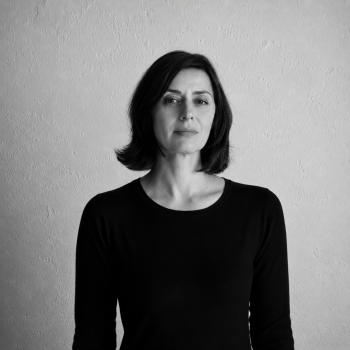
Keynote Address: Dr. Lilia Topouzova, Associate Professor, University of Toronto
After Violence: History, Memory, and the Work of Bearing Witness
ABSTRACT: What does it mean to spend a life documenting political violence? What happens when that life is also the subject? Lilia Topouzova grew up under, and in the long aftermath of, Bulgaria's communist authoritarian regime, and came of age in Canada. For more than two decades, her research has moved between archives, oral history, documentary film, creative nonfiction, and contemporary art, tracing the experiences of survivors and perpetrators of the gulag through the purged files of the secret police that sought to erase them. In this lecture, she reflects on how to work with partial evidence and incomplete testimony as both a scholar and an artist—an unsilencing that is, by necessity, an interdisciplinary practice, one that makes apparent that what can be archived cannot always be filmed, and what can be filmed cannot always be written. The lecture asks what it means to bear witness, and what ethical responsibilities emerge when the subjects of one's research become part of one's own life.
Reception
8:00-10:00 p.m. | Small Cafeteria
Appetizers & Cash Bar
- Friday18SepGeneral, Centre for the Study of State Violence Opening9:00 am - 5:00 pmRead More
Panel 1: Repairing Relations: Understanding and Challenging the Legacies of State Violence on Nbiising territory
9:00-10:30 a.m. | Outdoor Classroom
ABSTRACT: Nbiising lands and waters ensure all who live and work here have the opportunity to live a good life, but how many humans reciprocate or reflect on this generosity? We do not have to look hard to find evidence that our more-than-human relations are unwell: declining fish populations, polluted waters, fire-prone forests, destroyed medicine habitat, and high rates of illness amongst all beings. These realities tell explicit stories about the historic and current consequences of state/colonial violence on this territory, yet many people do not imagine that a meaningful way forward is to repair and heal our relationships with lands and waters in order to address the legacies and ongoing evidence of colonial violence on Nbiising territory.Anchored on Nbiising territory, this intergenerational panel brings together scholars who have documented, considered, and challenged our understanding of the legacies of colonial violence on Nbiising territory. Importantly, they do so in ways that document these stories and set direction for the next seven generations.
Chair/moderator: Katrina Srigley, Nipissing University
Panelists/Discussants
Nicole Latulippe, Geography, University of Toronto, Scarborough
Carly Dokis, Anthropology, Nipissing University
Megan Paulin, MA, Nipissing University
Bee Dokis, BA, Nipissing UniversityPanel 2: Recovering Historical Silences
1:00-3:00 p.m. | Room A226
ABSTRACT: Part of the historical process is recovering what has been lost. Damaged or destroyed documents, purposeful acts of forgetting, and the crafting of alternative narratives all pose challenges for historians. This panel brings together two scholars of state violence from different backgrounds to discuss how they restore the stories and voices that have been silenced. From photographs taken by victims, perpetrators, and bystanders of the Holocaust, to the American South at the beginning of the Black Power era, the panelists will reflect on the processes of historical amnesia and the ways in which their research deepens our understanding of state violence and its legacy.
Chair/moderator: Nathan Kozuskanich, Nipissing University
Panelists/Discussants
John Hayes, History, Augusta University “
“1970, 2020, and the Hidden History of Black Rebellions Against Police Violence”Valerie Hébert, History, Lakehead University, at Orillia
“Perpetrator Depictions of Violence and the Obliteration of Evidence”Recorded Message: Omer Bartov, Professor, Brown University
KEYNOTE
3:30-5:00 p.m. | Room A137
Why Military History (Still) Matters
Geoffrey Hayes, History, University of Waterloo
Commentary: Stephen Connor, HistoryABSTRACT: In this keynote address, Dr. Geoffrey Hayes explores how the study of war helps us understand the exercise of state power, the experience of conflict, and the enduring legacies of violence. At a time when conflict and state violence continue to shape global affairs in significant ways, the keynote offers a timely, relevant, and pressing reflection on the value of military history.
- Saturday19SepGeneral, Centre for the Study of State Violence Opening9:30 am - 11:30 amRead More
Workshop 1: Practical Strategies for Teaching Difficult Topics
9:30-11:30 a.m. | Education Room (A246)
ABSTRACT: The Current Ontario curriculum requires educators to teach difficult topics including residential schools, the Holocaust, slavery, genocide and other histories of state violence and discrimination. These topics ask educators to move beyond content delivery and support students as they engage with complex historical narratives, ethical questions, and emotional responses. Many educators, including in-service and teacher-candidates, need practical support in how to approach this teaching in developmentally and pedagogically appropriate ways. This 2 hour workshop offers practical strategies to do this.
Pre-registration is mandatory. Limited Seats. Fee applies.
Facilitator: Anna Pearson
Guest Speaker: The Honourable Anthony Rota, MP Nipissing-Timiskaming, retiredWorkshop 2: Imagining War: Game Design in Conflict Simulation
9:30-11:30 a.m. | Immersive Classroom (A251)
ABSTRACT: This interactive workshop explores analogue game design as an approach to teaching and learning about state violence. Drawing on Brian Train’s experience as a game designer, participants will examine how games can foster critical engagement with complex topics, including war, genocide, colonialism, and other forms of state violence.
The session begins with an overview of educational game design principles, highlighting how they can encourage historical thinking, ethical reflection, collaboration, and meaningful discussion. During the hands-on portion, participants will work in small groups to develop a concept for a short educational game addressing a topic aligned with the mandate of the Centre for the Study of State Violence. Through guided activities, participants will consider learning objectives, mechanics, narrative, and player experience while examining how games can engage with difficult histories thoughtfully and responsibly. No prior game design experience is required.
Presenter: Brian Train, Independent Game Designer, Victoria, BC (Virtual)
Chair: Stephen Connor, Nipissing UniversityPre-registration is mandatory. Limited Seats.
Workshop 3: Lilia Topouzova: Documenting Historical Narratives on Film For Graduate Students
9:30-11:30 a.m. | CSV Seminar Room (A242)
This interdisciplinary workshop explores documentary filmmaking as a mode of historical and scholarly inquiry. Through discussion and the screening of selected film excerpts, participants will examine how archival fragments, oral testimony, silence, and place can be translated into cinematic form. Central to the workshop will be the question of the image: how do filmmakers decide what to show, what to leave outside the frame, and when the absence or deliberate withholding of an image may be more meaningful, or even more ethically responsible, than its inclusion? Together, we will consider how visual presence and absence impact historical knowledge and the work of bearing witness.
No advance reading or preparation is required.
- Saturday19SepGeneral, Centre for the Study of State Violence Opening1:00 pm - 3:00 pmRead More
Investigating, Training, and Prosecuting Crime: Reflections from Ukraine and Canada
1:00-3:00 p.m. | NU Theatre (F213)
ABSTRACT At a time when state violence is aggressively reshaping the world around us, including challenges to maintaining the rule of law forged after 1945, legal professionals continue to work to uphold the rule of law. This panel explores the ways in which they navigate this increasingly complex and challenging reality, domestically and internationally.
Chair/Moderators: Stephen Connor and Hilary Earl, Nipissing University
Guest Speakers:
Dr. Oleg Duka, Deputy Director, Prosecutor’s Training Center of Ukraine (Virtual)
Oleksandr Ziuz, Head of the Department for Cooperation with Intergovernmental, Governmental, and Non-Governmental Organizations of the Department for Combating Crimes Committed in the Context of Armed Conflict, Ukraine (Virtual)
Rory Currie, BA, MA, JD
Matt Watson, Detective Inspector, Ontario Provincial Police, Criminal Investigation BranchWords From: Iryna Chechotka, Director, Prosecutor’s Training Center of Ukraine (virtual)
- Saturday19SepGeneral, Centre for the Study of State Violence Opening6:00 pm - 10:00 pmRead More
Public Film Screening & Director Talk: Betrayal (90 min.)
6:00-8:30 p.m. | NU Theatre (F213)
SYNOPSIS: The brother-in-law of Liberian dictator Charles Taylor becomes a courageous whistleblower against the dictator’s regime. Risking everything, including his own family, he fights to bring Taylor to justice, confronting the legacy of fear and corruption that has shaped his life.
Q & A with Director Lena MacDonald, Toronto
MC: Hilary Earl, Nipissing UniversityReception
8:30-10:00 p.m. | Location TBA
Cash bar and appetizers.
- Sunday20SepGeneral, Centre for the Study of State Violence Opening10:00 am - 12:00 pmRead More
Panel Discussion: Experiences with State Violence: Reflections and Aftermath
10:00-12:00 p.m. | Centre for Teaching and Learning, Sandbox
ABSTRACT: This panel brings together three individuals whose lives have been impacted by different forms of state control, armed conflict, and state policy. Through personal testimony, visual imagery, and reflection, the speakers will share their stories.
Chair/moderator Rosemary Nagy
Speakers
- Ольга Іванченко (Olha Ivanchenko)
- Tim Feick
- Elder John Sawyer, Nipissing First Nation